Hecke algebras, representations and combinatorics
Université de Tours, 7-9 July 2026
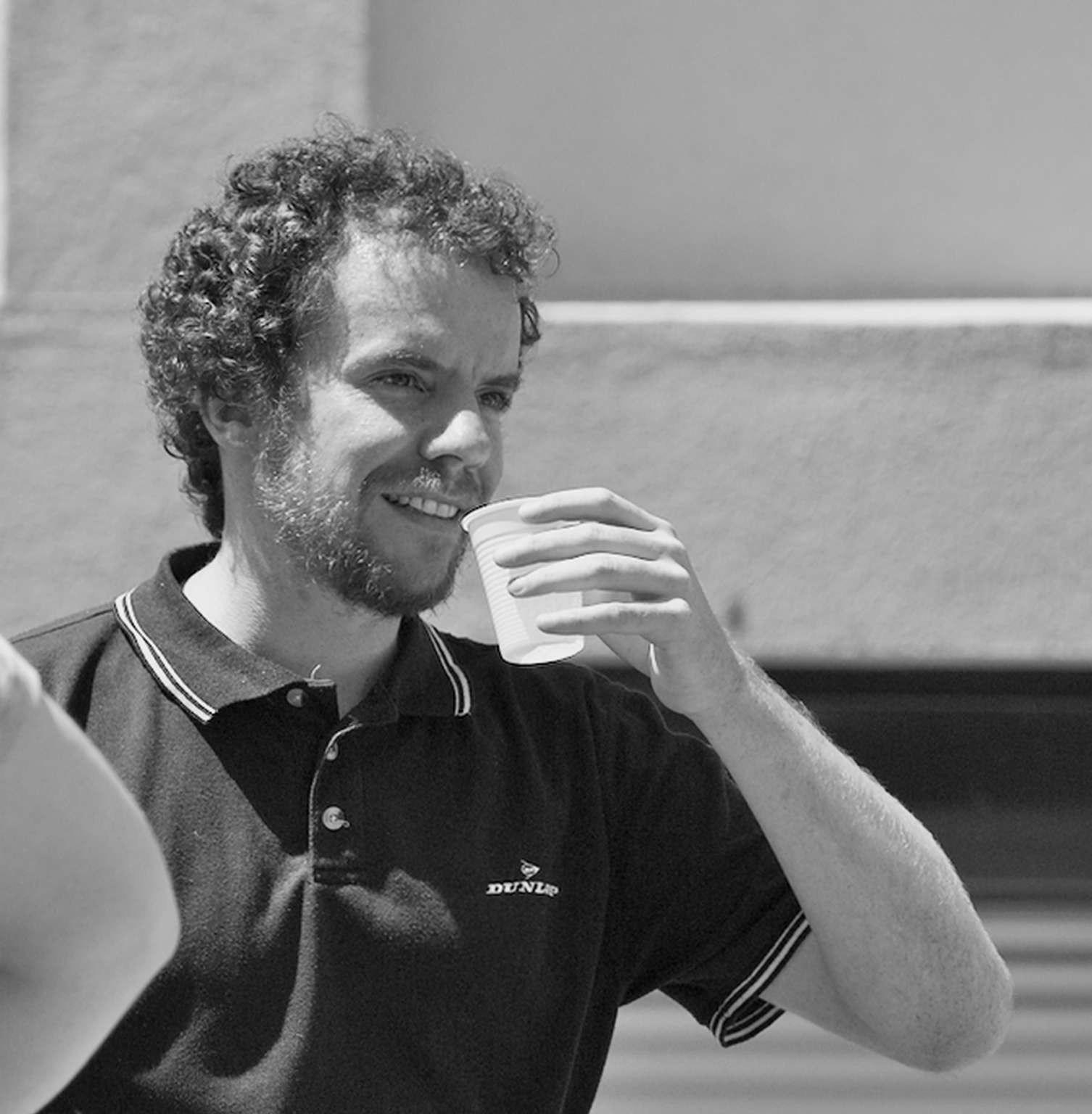
A conference to celebrate the life and work of Jérémie Guilhot (1980–2025), highlighting the areas of mathematics where he made profound contributions: combinatorics of root systems and Coxeter groups, representations of Hecke algebras and Kazhdan-Lusztig theory, combinatorial Lie theory, and random walks.
Here is a tribute text in French and in English.
Speakers
- Cédric Bonnafé (Université de Montpellier)
- Maria Chlouveraki (National and Kapodistrian University of Athens)
- Maud De Visscher (City St George's, University of London)
- Thomas Gerber (Université Lyon 1)
- Jean-Baptiste Gramain (University of Aberdeen)
- Gerhard Hiss (RWTH Aachen)
- Martina Lanini (Università di Roma Tor Vergata)
- Frank Lübeck (RWTH Aachen)
- Sinéad Lyle (University of East Anglia)
- James Parkinson (University of Sydney)
- Petra Schwer (Universität Heidelberg)
- Pierre Tarrago (Sorbonne université Paris)
Programme
Below is the tentative schedule. All talks will be in Amphi E040.
| Tuesday 07/07 | Wednesday 08/07 | Thursday 09/07 | |
|---|---|---|---|
| 10:00 - 10:40 | Frank Lübeck | Sinéad Lyle | Maud de Visscher |
| 11:00 - 11:45 | Pierre Tarrago | James Parkinson | Thomas Gerber |
| 12:00 - 14:00 | Lunch break | Lunch break | Lunch break |
| 14:00 - 14:45 | Cédric Bonnafé | Petra Schwer | Free discussion |
| 15:00 - 15:45 | Maria Chlouveraki | Jean-Baptiste Gramain | Free discussion |
| 16:00 - 16:15 | Coffee break | Coffee break | |
| 16:15 - 17:00 | Gerhard Hiss | Martina Lanini | Afternoon snack |
| 17:00 - 18:30 | Speeches and photos tribute session |
||
| 18:30 - 21:00 | Dinner (picnic) |
Abstracts
Cédric Bonnafé (Montpellier)Twisted involutions and Calogero-Moser cells
Involutions, and particularly Duflo involutions, play an important role in the theory of Kazhdan-Lusztig cells (at equal or unequal parameters) of real reflection groups. Calogero-Moser cells are an attempt to generalize the theory of Kazhdan-Lusztig cells to finite complex reflection groups: we explain in this talk why we think that twisted involutions of finite complex reflection groups should be the correct generalization of involutions with respect to Calogero-Moser cells.
Maria Chlouveraki (Athens)
Blocks and Schur elements for Hecke algebras of exceptional complex reflection groups
Complex reflection groups are finite groups generated by (pseudo)reflections. They are products of irreducible complex reflection groups, which can either belong to the infinite series G(de,e,n) or to the 34 exceptional groups G4,G5, . . . ,G37. Most results obtained with the use of algebraic combinatorics for the former are obtained with the use of computational algebra for the latter. In this talk, we will give an overview of our results on the modular representation theory of Hecke algebras associated with exceptional complex reflections obtained computationally: from the description of blocks and Schur elements to the verification of old and new conjectures.
Maud De Visscher (London)
Graded representations of Temperley-Lieb algebras
In this talk I will discuss the representations of ordinary Temperley-Lieb algebras, one-boundary TL algebras (also known as blob algebras) and two-boundary TL algebras (also known as symplectic blob algebras). Plaza and Ryom-Hansen obtained a grading on the ordinary and the one-boundary TL algebras by relating these to quiver Hecke algebras (introduced by Khovanov-Lauda and Rouquier). The corresponding graded decomposition numbers are given by Kazhdan-Lusztig polynomials. I will review these results and then explain how we can obtain a grading for the two-boundary case using the orientifold quiver Hecke algebra introduced by Varagnolo-Vasserot and formulate a conjecture for the graded decomposition numbers. This is joint work with Chris Bowman, Zajj Daugherty, Rob Muth and Loic Poulain D’Andecy.
Thomas Gerber (Lyon)
Combinatorial aspects of Howe duality
Howe duality is a classical result in Lie theory that relates weight multiplicities and certain tensor multiplicities for classical semisimple complex Lie algebras of different rank. I will explain how to approach Howe duality via combinatorial tools and present some applications. This is based on joint work with Jérémie Guilhot, Cédric Lecouvey, and more recently Bogdan Ion and Cristian Lenart.
Jean-Baptiste Gramain (Aberdeen)
Using Learning Journals as an educational and evaluative tool in HE Mathematics
After a brief period of use of alternative assessments during the COVID-19 pandemic, HE Mathematics mostly reverted back to traditional methods of assessments, in particular homeworks and exams. Despite this, and in view of recent evolutions of Gen AI, a wide reflection on assessment could help inform better and innovative practices. As part of the assessment for an undergraduate course in Linear Algebra, students were asked to complete weekly entries in a Learning Journal. Their entries were submitted each week, graded, and contributed to their final grade for the course. By studying the Learning Journals written by students, the aim of the project is to demonstrate: 1. That Learning Journals can be used as a valid way to evaluate and assess students' learning and understanding in Mathematics. 2. That Learning Journals can be used as a pedagogical tool to enhance students' learning and understanding in Mathematics. The project is still ongoing, but the first results indicate that Learning Journals may indeed provide one (not very) innovative solution to enhance teaching in HE Mathematics.
Gerhard Hiss (Aachen)
On Donovan's conjecture for finite simple groups of Lie type
This is a report on joint work with Radha Kessar. Arnaud Eteve recently proved a conjecture of Dudas and Malle on intersection cohomology characters of finite groups of Lie type. This yields upper bounds on the decomposition numbers of unipotent blocks of simple groups of Lie type. We present some consequences of these bounds to Donovan's conjecture.
Martina Lanini (Rome)
From quivers to polyhedral complexes
In this talk I will report on joint work with Alessio Cipriani. To a quiver with relations one can associate a polyhedral complex, known as its wall and chamber structure. We focus on a specific quiver with relations, whose category of representations is equivalent to a certain parabolic block of category O for sl_n. We show that, in this case, the polyhedral complex is obtained from a type A Coxeter arrangement by removing some half-hyperplanes. The chambers are counted by a binomial coefficient. The proof is combinatorial and relies on the classification of indecomposable representations of special biserial algebras, where representations are encoded by strings.
Frank Lübeck (Aachen)
Computing Green functions and applications
Deligne and Lusztig defined several types of Green functions as functions on unipotent conjugacy classes of finite reductive groups. In this talk, I would like to provide an overview of this topic and focus in particular on the explicit calculation of these functions. I will mention some progress in recent years and some applications.
Sinéad Lyle (Norwich)
Rouquier blocks for Ariki-Koike algebras
The Rouquier or RoCK blocks are important and much-studied blocks of the symmetric group algebra that are best described using abacus combinatorics, where we identify a partition with an abacus configuration. Here we describe an analogue of the Rouquier blocks for the Ariki-Koike algebras using combinatorial methods and talk through some related results.
James Parkinson (Sydney)
Combinatorial Kazhdan-Lusztig Theory
Jérémie made valuable and lasting contributions to Kazhdan-Lusztig theory of Hecke algebras with "unequal parameters". In this setting, many of the geometric interpretations of the "equal parameter" theory do not hold, and new techniques are required - typically of a combinatorial flavour. In this talk I will outline work Jérémie did in this direction, some of which I had the privilege of being a part of.
Petra Schwer (Heidelberg)
Conjugation in affine Coxeter groups and beyond
Conjugacy classes in rank n affine Coxeter groups have a beautiful and simple geometric description in terms of their natural action on (n−1)-dimensional vector spaces. Moreover, one can locate the conjugating elements and centralizers in the vector space as well. These results allow to characterize the growth of the conjugator length function by geometric investigations.
Pierre Tarrago (Paris)
Alcoves, graphs and particles
In this talk, I will present a class of Markov chains coming from the homology ring of the affine Grassmannian, a geometric construction that we will mainly approach from a combinatorial point of view. Then, I will explain why specific examples of this class are relevant to certain theoretical physics models. This talk is based on joint work with Jérémie Guilhot and Cédric Lecouvey.
How to get there
The conference will take place on the Grandmont Campus in Tours, at the Institut Denis Poisson, see the map below. All talks will be in Amphi E040. You can reach the institute by taking:
- Bus 2 from Tours main station (easiest option),
- Bus 16 from Saint Pierre des Corps station (less frequent departures).
Accommodation
If you need to book your own accommodation, we recommend staying close to the station or in the city center.
Lunch and dinner
Lunch will be provided during the conference, but dinner wil not.
List of participants
Registration
Use this form to register. Registration will be accepted within the limit of available places.
Organisers
If you have any questions, you can contact one of the organisers:Partenaires
| Institut Denis Poisson | ANR CORTIPOM | IRN Representation Theory | Université Lyon 1 | RT Algèbre |
|---|---|---|---|---|
|
|
|
|
|